
真空檢測
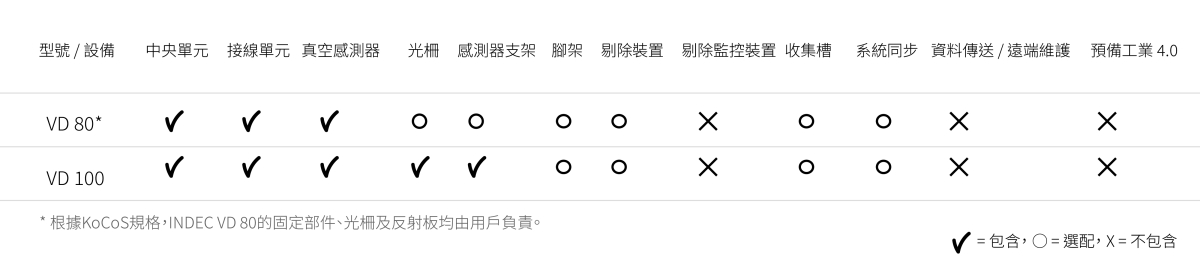
VACUUM INSPECTION 型號:INDEC VD 80|100
INDEC 提供的非接觸式、100% 產線即時真空檢測,可於生產過程中對玻璃罐、瓶子、金屬罐及類似容器進行全面檢查。系統可以可靠辨識真空不足、歪斜或未正確鎖緊的瓶蓋,以及缺蓋容器,並自動將不良品剔除。
-
INDEC 真空檢測解決方案
INDEC 提供的非接觸式、100% 產線即時真空檢測,可於生產過程中對玻璃罐、瓶子、金屬罐及類似容器進行全面檢查。系統可以可靠辨識真空不足、歪斜或未正確鎖緊的瓶蓋,以及缺蓋容器,並自動將不良品剔除。
感測器會量測瓶蓋面的變形量,它與容器內部真空度直接相關。量測數據由測試軟體進行分析,並透過與標準樣品的數據比較來判定容器的氣密性。目標值可透過簡單直覺的 Teach-in功能自動設定。所有容器參數皆依容器格式個別儲存,設定只需按一下按鍵即可完成。
系統透過觸控螢幕搭配薄膜按鍵進行操作。所有系統訊息及目前測試狀態,皆清楚顯示於彩色圖形顯示器上。所有外殼與插頭連接器皆符合 IP69K 等級,可承受高壓或蒸汽清洗。
INDEC 產線式真空測試系統
操作與整合
在食品製造產業中,確保產品符合最高品質標準至關重要。
容器的氣密性在此扮演關鍵角色。洩漏不僅會造成內容物流失,更嚴重的是會讓細菌進入容器,使產品無法使用。
INDEC 真空測試系統可於生產過程中,全自動監控容器的氣密性。系統可針對瓶子、玻璃罐與金屬罐等多種容器進行非接觸式洩漏檢測。
檢測方式可利用容器內原本的真空狀態,或為測試目的而特別製造的真空狀態。任何氣密性不足的容器,皆可靠地被識別並自動剔除。
這些由處理器控制的測試系統具備高度可靠性與極佳操作便利性,因此早已成為全球眾多企業的首選解決方案。
系統組成
中央單元
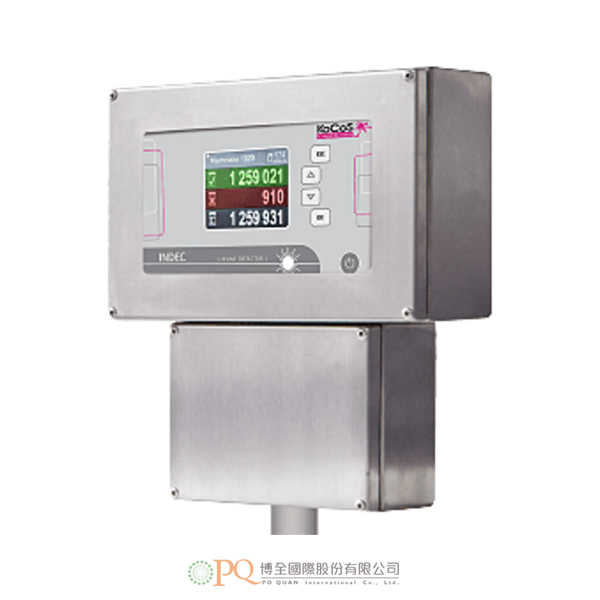
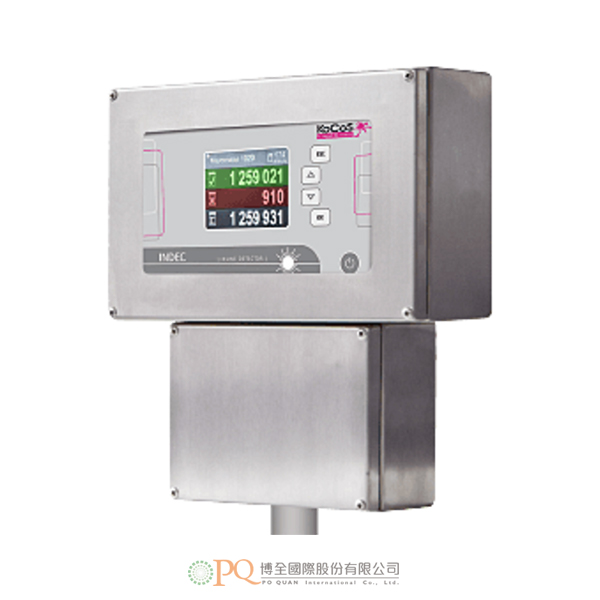
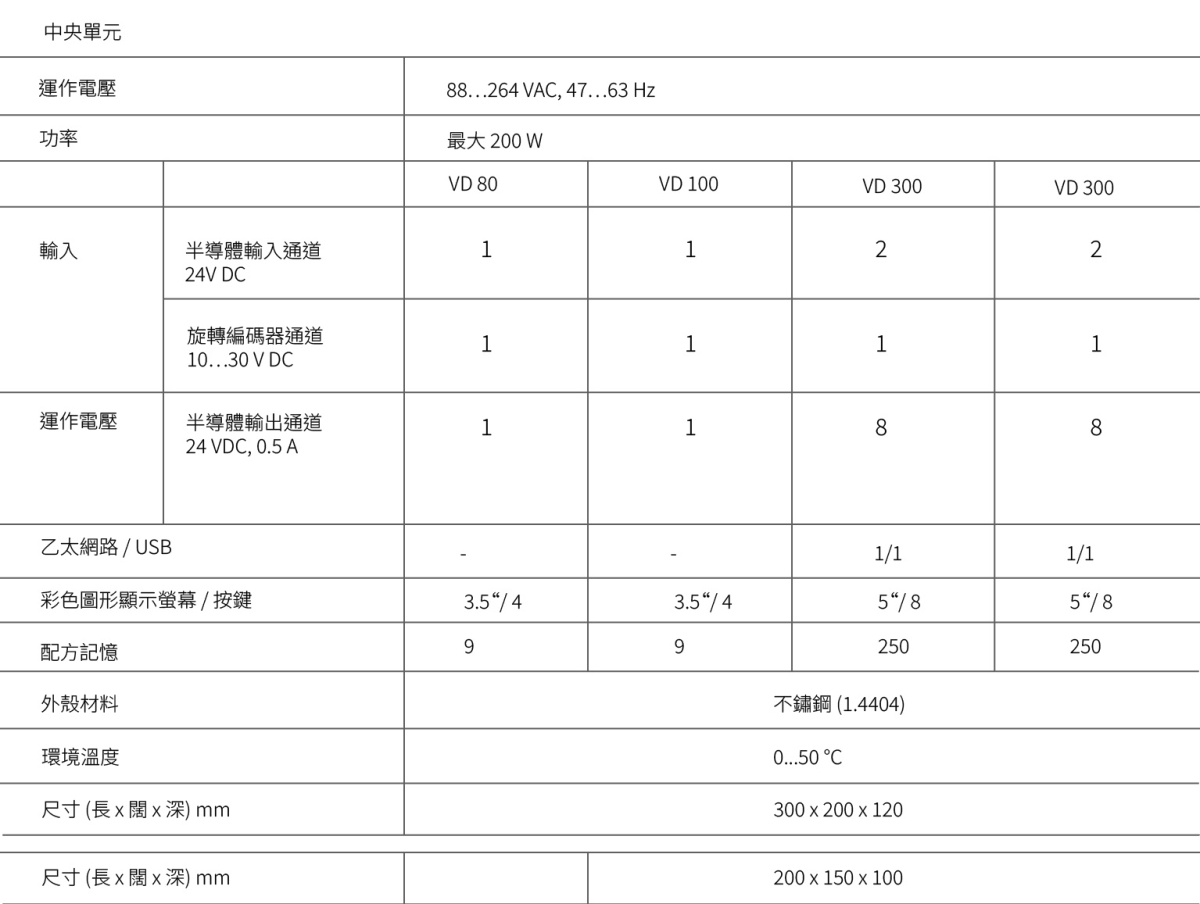
中央單元負責處理來自真空感測器與光柵的數據,並由真空測試軟體計算剔除裝置的控制訊號。系統配備彩色圖形顯示的觸控螢幕、多語言操作介面及薄膜按鍵,用於資料輸入與顯示。待測容器的配方參數可透過程式化流程建立並儲存。
接線單元
接線單元的不鏽鋼外殼直接固定於中央單元上。供電電壓及所有訊號線皆於此進行配置,用戶端的所有電氣安裝亦透過此單元完成。
產品檢測用光柵
反射式光柵(含反射板及可調支架)用於產品檢測並觸發量測。
其特色包括高抗環境光干擾能力、可承受清潔劑與消毒劑並可以高壓清洗的堅固金屬外殼。光柵配有高可視度狀態 LED,具備精準切換與高偵測品質,確保可靠的物件偵測。支架可垂直與水平調整,並採用耐腐蝕不鏽鋼材質。
可調式感測器與光柵支架
此真空感測器與光柵支架可依容器高度與位置進行垂直與水平調整,並配有刻度,方便重現設定。所有設定值可由測試軟體管理,並顯示於圖形介面上。
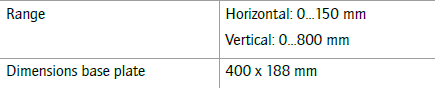
支架採用耐腐蝕不鏽鋼製成,並固定於可直接鎖附至輸送帶系統的底板上。
剔除裝置
剔除裝置負責將檢測為不良的容器自產線中移除。
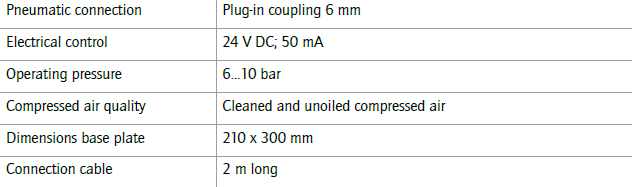
其控制與調整皆由中央單元完成,組成包括氣動閥與氣缸、含手動關閉閥的壓縮空氣處理單元、含濾網的壓力調節器及可調式固定支架
整組裝置安裝於可直接固定在輸送帶上的底板上,氣動閥與氣缸由不鏽鋼防護外殼保護。
剔除監控
此功能用於確認不良容器是否確實被剔除。需在剔除裝置對側、沿輸送方向設置另一組光柵。若在剔除動作觸發後的可調延遲時間內,感測器未偵測到不良容器通過,系統即會產生錯誤訊息。
不良品收集槽
大型不鏽鋼收集槽用於收集被剔除的容器。整體結構堅固,邊緣採翻邊設計,完全由耐腐蝕不鏽鋼製成。
收集槽設有四個固定孔,可直接安裝於輸送帶剔除裝置的對側。
可變輸送速度的系統同步
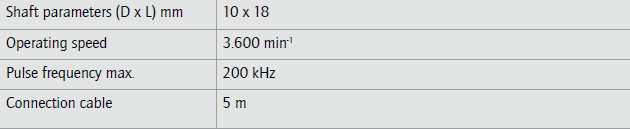
此選配功能包含軟體擴充模組與可直接連接的旋轉編碼器,可讓 INDEC 系統與輸送帶速度同步,以因應變速產線。中央單元會即時解析旋轉編碼器的脈波,精準判定容器位置並準確控制剔除時機。此衛生型旋轉編碼器可承受清潔劑與消毒劑、IP69K 防護等級並可承受高壓 / 蒸汽清洗。透過 5 公尺連接線與接線單元相連,支援順時針與逆時針旋轉。
中央與接線單元腳架
支架結構穩固,包含三腳底座(附水平調整腳)與立柱。
中央單元與接線單元透過夾具安裝,可調整高度。
三腳底座具水平調整功能,可於不平整地面使用。
支架主體採用耐腐蝕不鏽鋼,腳座底板為抗菌塑膠材料,並可透過三個孔位牢固固定於地面。
光學感測器
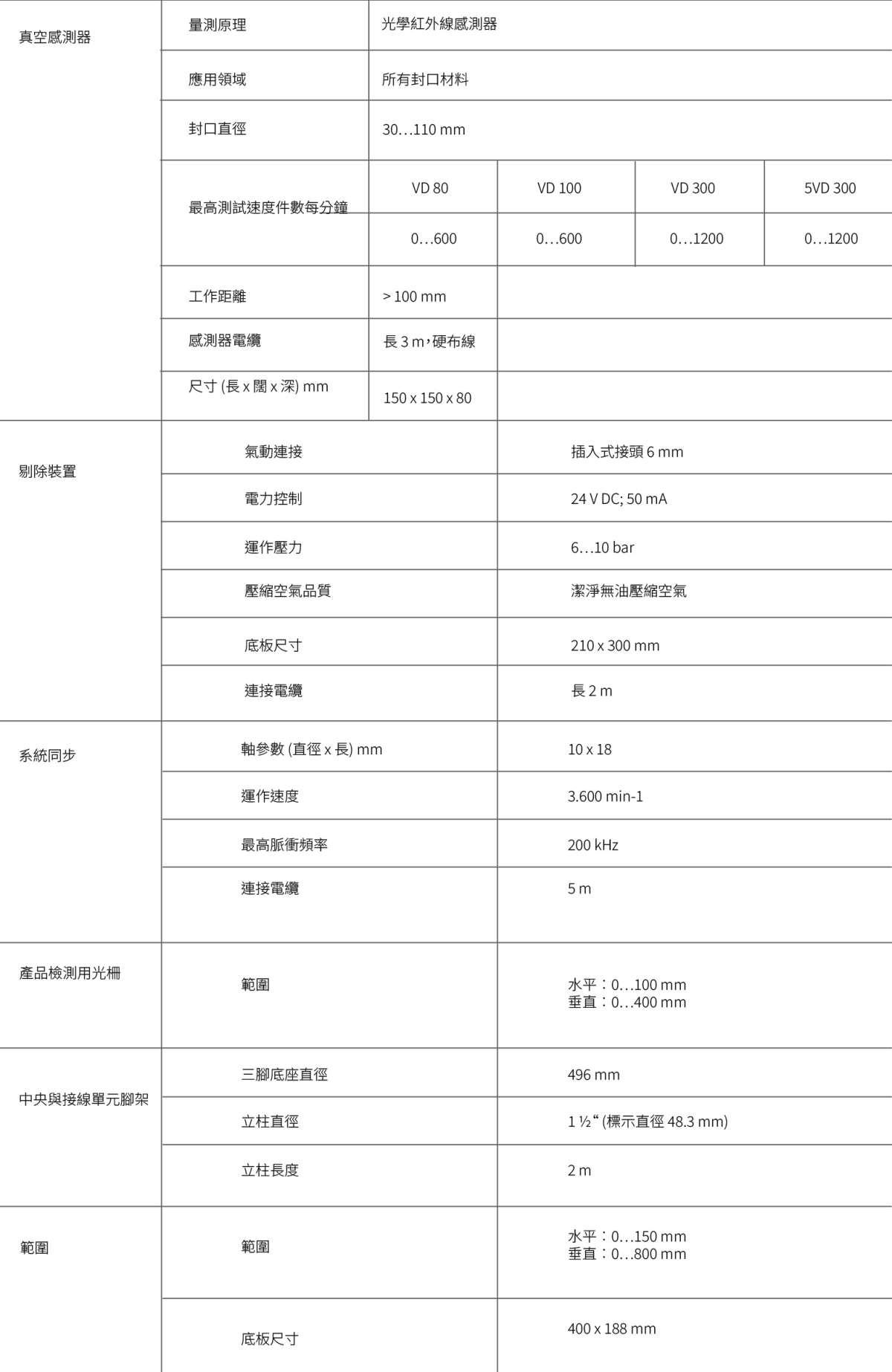
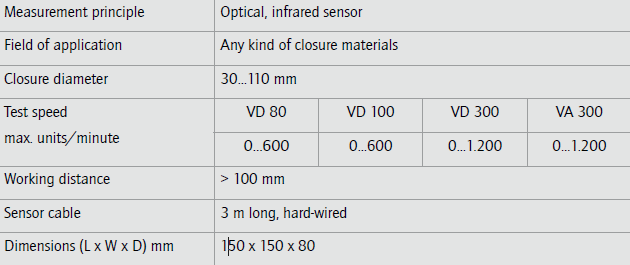
感測器內含紅外線發射二極體及雙排接收二極體。感測器的不鏽鋼外殼底部設有 13 × 5 cm 的開口視窗,可容許產線中容器輕微的軌道偏移。所有常見瓶蓋形式皆可使用同一顆感測器量測,毋需因不同量測任務更換感測器。
-
-
Vacuum inspection with INDEC
The non-contact, 100% in-line vacuum inspection of jars, bottles, cans and similar containers is carried out within the production process. Containers which show insufficient vacuum, cocked/tilted caps or missing caps are reliably identified and automatically rejected.
A sensor measures the cap panel deflection which is dependent on the vacuum inside the container. The measurement values are evaluated by the testing software, leak tightness is assessed by comparing the data of each container with the data of a golden sample. The desired values are determined automatically by means of a simple, easy-to-use teach-in function. All container parameters are saved format-specifically and settings are made at the touch of a button.
The systems are operated using a touch screen in combination with a membrane keypad. All system messages and information about the current test procedure are displayed clearly on the colour graphics display. All housings and plug connectors can withstand high-pressure/steam cleaning in compliance with IP69K.
INDEC In-line Vacuum Test Systems
Operation and integration
Ensuring that products meet the highest quality standards is absolutely essential in the manufacture of food products in particular.
Leak-tight product containers have a major role to play here. Leakages allow the contents of a container to get out, but more importantly they also allow germs to get in, rendering the contents unusable.
INDEC vacuum test systems monitor containers for leak tightness fully automatically within the production process. A wide range of containers, including bottles, jars and cans are tested for leak tightness by means of a non-contact inspection.
The means to this end is a pre-existing vacuum or a vacuum created in the container expressly for the purpose of leakage testing. Containers which are not leak-tight are reliably identified and automatically rejected.
These processor-controlled test systems are highly reliable and extremely easy to use, qualities which have played no small part in making them the first choice already for many companies throughout the world.
Components
Central unit
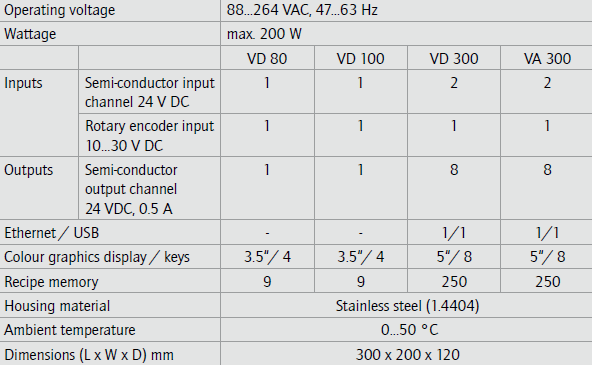
In the central unit, the data acquired by the vacuum sensor and the light barrier unit is processed by the vacuum testing software and the control signals are calculated for the ejector. A touch screen with a colour graphics display, multilingual user interface and membrane keypad is provided for data entry and display. The recipe parameters for the containers to be tested are generated and saved via program routines (teach-in).
Connection unit
The stainless steel housing of the connection unit is fixed directly to the central unit. The supply voltage and all signal leads are assigned in the connection unit. All installations by users are also carried out via the connection unit.
Light barrier unit for product detection
The reflective light barrier complete with reflector and adjustable holding fixtures is used for product detection to start the measurement.
High immunity to optical interference from the environment is a distinguishing feature of the light barrier as well as its rugged metal housing which is detergent and disinfectant-proof and able to withstand high-pressure cleaning. The light barrier features highly visible status LEDs. Precise switching and high detection quality guarantee reliable object detection. The light barrier is equipped with an adjustable fixture for mounting on the sensor and light barrier holding bracket. The holding fixtures for the light barrier and reflector are made of rust-resistant stainless steel and can be adjusted in a vertical and horizontal direction.
Sensor and light barrier holding bracket, adjustable
The holding bracket with fixtures for the vacuum sensor and light barrier unit can be adjusted in a vertical and horizontal direction in accordance with the height and position of the container. Integrated scales make it possible to reproduce the settings at any time. The values of the settings can be managed in the testing software and can be shown on the graphics display.
The holding bracket is made of rust-resistant stainless steel and is mounted on a base plate which can be screwed directly to the conveyor system.
Ejector unit
With the ejector unit, containers which have been identified as defective by a test system are removed from the production flow.
Control and adjustment in line with the container parameters are performed with the central unit. The ejector unit consists of a pneumatic valve and cylinder, a compressed air service unit with manual shut-off valve, a pressure regulator with filter and an adjustable holding fixture.
To make it easy to fix the ejector unit to the conveyor system, the entire unit is mounted on a base plate which can be screwed directly to the conveyor system. The pneumatic valve and cylinder are protected by a housing made of rust-resistant stainless steel.
Ejector monitoring
The ejector monitoring function is used to ensure that the ejector has separated a pack that has been detected as bad from the product flow. For this purpose, another light barrier is arranged parallel to the conveyor belt opposite the ejector. If the light barrier is not interrupted by the defective pack within the adjustable delay after the ejector has been triggered, an error messaged is generated.
Collection tray for defective containers
The large stainless steel tray is used to collect rejected containers. The rugged construction with crimped edges is made entirely of rust-resistant stainless steel.
The tray is provided with four drill holes and is fixed directly to the conveyor system opposite the ejector unit.
System synchronization for variable conveyor speeds
The device option for system synchronization contains a software extension and a rotary encoder which is ready for connection. With this option, INDEC systems can be synchronized with the speed of the conveyor system to accommodate variable conveyor speeds.
Real-time evaluation of the rotary encoder pulses by the INDEC central unit enables the position of the container to be determined exactly and the ejector to be controlled precisely. The hygienic rotary encoder is detergent and disinfectant-proof and IP69K protection makes it able to withstand high-pressure/steam cleaning. It is connected to the connection unit by means of a 5 m long connection cable and can rotate in a clockwise or anti-clockwise direction.
Stand for central unit and connection unit
The robust, stable stand for the central unit and connection unit consists of a tripod base with levelling feet and a stand tube.
The central unit and the connection unit are mounted using clamps which provide height adjustability.
The levelling mechanism of the tripod base provides stability on uneven surfaces.
The base and stand tube are made of rust-resistant stainless steel. The base plates of the levelling feet are made of anti-bacterial plastic and can be fixed securely to the floor by means of three drill holes.
The optical sensor
Inside the sensor head are the infrared transmitter diode and the double row of receiver diodes. The stainless steel housing of the sensor head has an opening window of (13 × 5) cm at the bottom. This allows a small track misalignment of the containers in routine operation. All common closures are measured with one and the same sensor head. It is not necessary to exchange the sensor head depending on the measuring task. -
Central unit

Vacuum sensor
Ejector unit
System synchronisation
Light barrier unit for product detection

Stand for central unit and connection unit

Sensor and light barrier holding bracket