選擇品牌

-
 AstroNova
-
 AOiP
AOiP
-
 ADASH
ADASH
-
 Amptek
-
 Automatic Research
-
 AWSensors
-
 AARONIA AG
-
 BASI
BASI
-
 CALMET
-
 DV Power
-
 DANATRONICS
-
 Dioxide Materials
-
 ED & D
-
 ELVEFLOW
-
 ECH
ECH
-
 Elsys
Elsys
-
 EA Technology
-
 Enapter
-
 Electrothermal
-
 Enervac
-
 EL-CELL
-
 ENERGY SUPPORT
-
 FASTEC
-
 GMW
GMW
-
 Gaskatel
-
 GIUSSANI
-
 Globecore
-
 GRZ
GRZ
-
 HVPD
HVPD
-
 HIGH SENSE SOLUTIONSHTW
-
 HUBER
HUBER
-
 IVIUM
IVIUM
-
 Ida
Ida
-
 Instytut Fotonowy
-
 JGG
JGG
-
 Jacomex
-
 Jenway
-
 Kocos
Kocos
-
 KEHUA TECH
-
 micrux
-
 Metrel
-
 Microrad
-
 METERTEST
-
 ndb
ndb
-
 Norecs
-
 Novocontrol
-
 Neware
-
 OKOndt Group
-
 OZM
OZM
-
 Pine Research
-
 Pinflow
-
 Redoxme
-
 SATIR
SATIR
-
 Sonel
Sonel
-
 Serstech
-
 SDT
SDT
-
 SENSIA
-
 SIKA
SIKA
-
 SMC
SMC
-
 TANDELTA
-
 TENTECH
-
 Turnkey Instruments
-
 VacCoat
-
 Zurich Instruments
- AstroNova
- AOiP
- ADASH
- Amptek
- Automatic Research
- AWSensors
- AARONIA AG
- BASI
- CALMET
- DV Power
- DANATRONICS
- Dioxide Materials
- ED & D
- ELVEFLOW
- ECH
- Elsys
- EA Technology
- Enapter
- Electrothermal
- Enervac
- EL-CELL
- ENERGY SUPPORT
- FASTEC
- GMW
- Gaskatel
- GIUSSANI
- Globecore
- GRZ
- HVPD
- HIGH SENSE SOLUTIONSHTW
- HUBER
- IVIUM
- Ida
- Instytut Fotonowy
- JGG
- Jacomex
- Jenway
- Kocos
- KEHUA TECH
- micrux
- Metrel
- Microrad
- METERTEST
- ndb
- Norecs
- Novocontrol
- Neware
- OKOndt Group
- OZM
- Pine Research
- Pinflow
- Redoxme
- SATIR
- Sonel
- Serstech
- SDT
- SENSIA
- SIKA
- SMC
- TANDELTA
- TENTECH
- Turnkey Instruments
- VacCoat
- Zurich Instruments
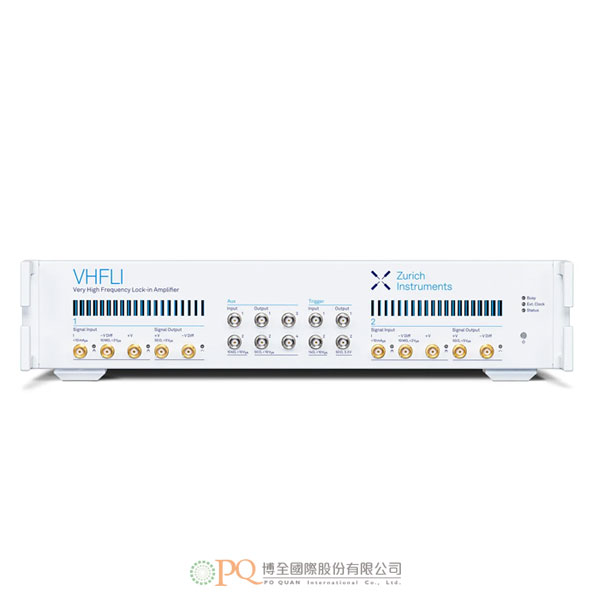
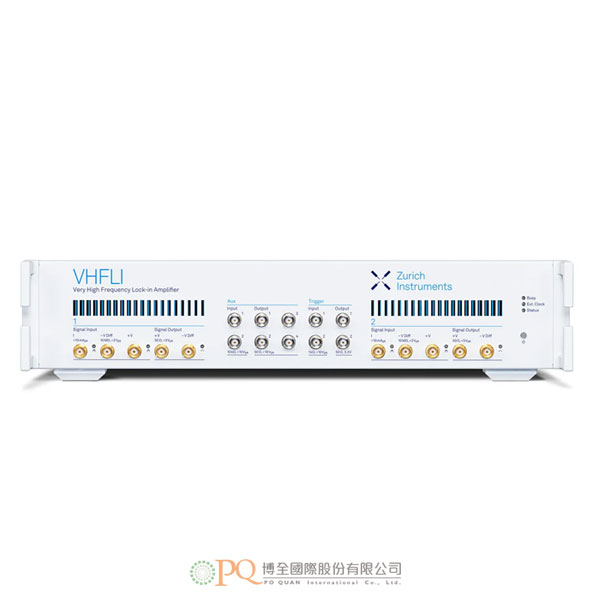
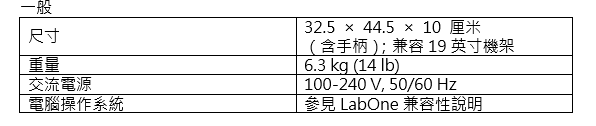
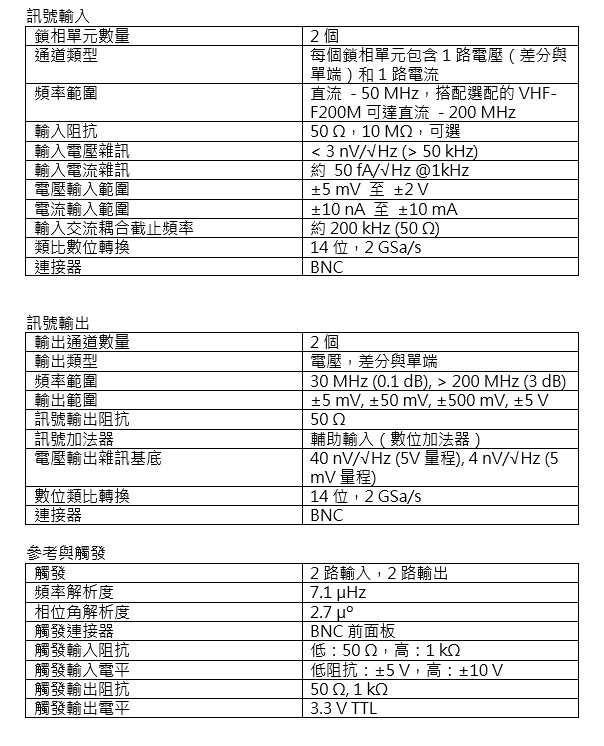
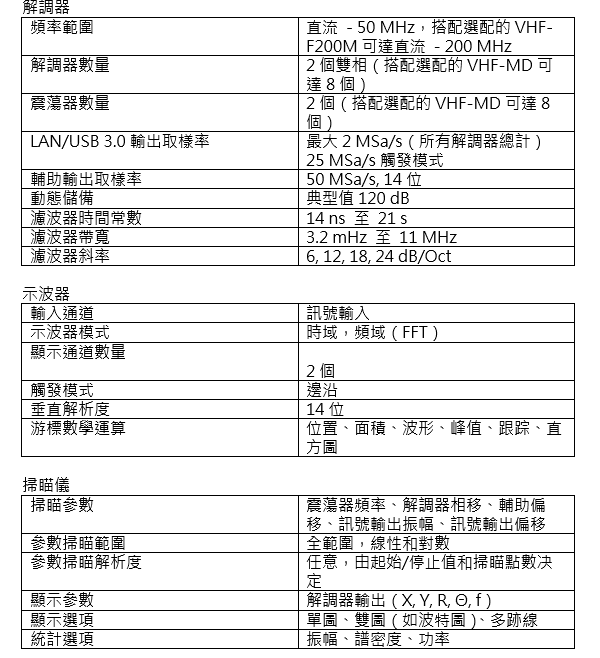
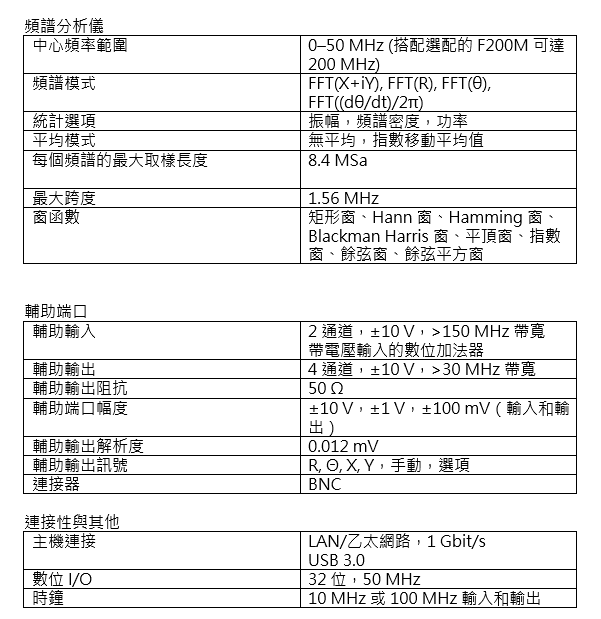
50 MHz / 200 MHz 鎖相放大器
50 MHz / 200 MHz Lock-in Amplifier 型號:VHFLI
• 分析、生成與控制功能覆蓋直流至50 MHz(搭配選配的VHF-F200M可達200 MHz)
• 精確測量多達兩路電流與兩路電壓訊號
• 快速測量時間與極低雜訊基底
• 通過LabOne®時間線模組統一編排複雜的連續波與脈衝測量序列
• LabOne®工具組包含示波器、掃瞄儀及頻譜分析儀
• 通過選配升級擴展您的工具組
• 精確測量多達兩路電流與兩路電壓訊號
• 快速測量時間與極低雜訊基底
• 通過LabOne®時間線模組統一編排複雜的連續波與脈衝測量序列
• LabOne®工具組包含示波器、掃瞄儀及頻譜分析儀
• 通過選配升級擴展您的工具組
-
50 MHz / 200 MHz 鎖相放大器主要特點
- 分析、生成與控制功能覆蓋直流至50 MHz(搭配選配的VHF-F200M可達200 MHz)
- 精確測量多達兩路電流與兩路電壓訊號
- 快速測量時間與極低雜訊基底
- 通過LabOne®時間線模組統一編排複雜的連續波與脈衝測量序列
- LabOne®工具組包含示波器、掃瞄儀及頻譜分析儀
- 通過選配升級擴展您的工具組
產品特點Zurich Instruments VHFLI鎖相放大器是一款數位式多功能測量儀器,頻率範圍覆蓋直流至50 MHz(搭配選配的VHF-F200M可達200 MHz)。憑藉業界領先的類比性能設計,它繼承了前代儀器久經考驗的強大功能,這些功能集成包括反饋回路、多頻操作、任意波形生成和邊帶分析。通過VHFLI鎖相放大器,您將能夠:- 通過同時運行示波器、掃瞄儀、頻譜分析儀等多種工具,從多個面向全面觀察您的訊號。
- 通過LabOne時間線模組協調脈衝、觸發、測量與控制器,統一編排您的測量序列。
- 快速建立精準的多通道電流與電壓測量,並具備超低雜訊基底。
- 借助極短的時間常數捕捉快速訊號動態,並提升數據吞吐量。
- 高效使用LabOne的圖形使用者界面與應用程式介面,其具備使用者友好操作和實驗室就緒的工作流程。
- 利用差分輸入最大化訊號完整性。
- 通過算術單元對訊號執行算術運算。
- 以極具競爭力的價格享受領先業界的性能優勢。
應用領域VHFLI鎖相放大器的低輸入雜訊、寬闊的分析帶寬和極短的低通濾波器時間常數,使其成為最嚴苛訊號分析應用的理想測量工具。- 感測器:微機電系統、奈米機電系統、量子傳感
- 光學與光子學:拉曼光譜、泵浦-探測光譜、納米光力學、光學鎖相迴路、太赫茲光譜
- 失效分析:激光電壓探測與成像
- 材料科學:載流子遷移率、載流子密度、霍爾效應
- 掃瞄探針顯微鏡:原子力顯微鏡、掃瞄穿隧顯微鏡、磁力顯微鏡
由 LabOne ® 驅動VHFLI鎖相放大器包含LabOne®控制軟件,憑借其圖形用戶界面,使設置過程輕鬆便捷。它還對整個測量工具組提供控制功能,包含鎖相放大器、帶FFT功能的雙通道示波器、參數掃瞄儀、頻譜分析儀等。此外,所有功能與數據採集均可通過主流編程語言訪問,以便於系統集成:支持LabVIEW®、MATLAB®、C、.NET和Python。 -
50 MHz / 200 MHz Lock-in AmplifierKey Features
- Analyze, generate, and control from DC to 50 MHz (200 MHz with the VHF-F200M option)
- Precisely measure up to two current and voltage signals
- Fast measurement time and low noise floor
- Orchestrate complex CW and pulsed measurement sequences with the LabOne® Timeline Module
- LabOne® toolset including Scope, Sweeper, Spectrum Analyzer
- Expand your toolset with upgrade options
Features
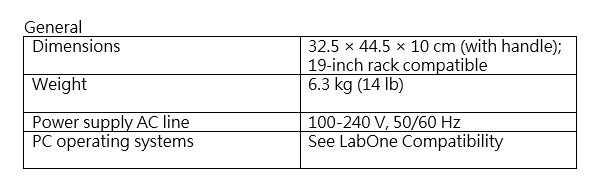
The Zurich Instruments VHFLI Lock-in Amplifier is a digital, multipurpose measurement instrument that covers the frequency range from DC to 50 MHz (200 MHz with the VHF-F200M option).
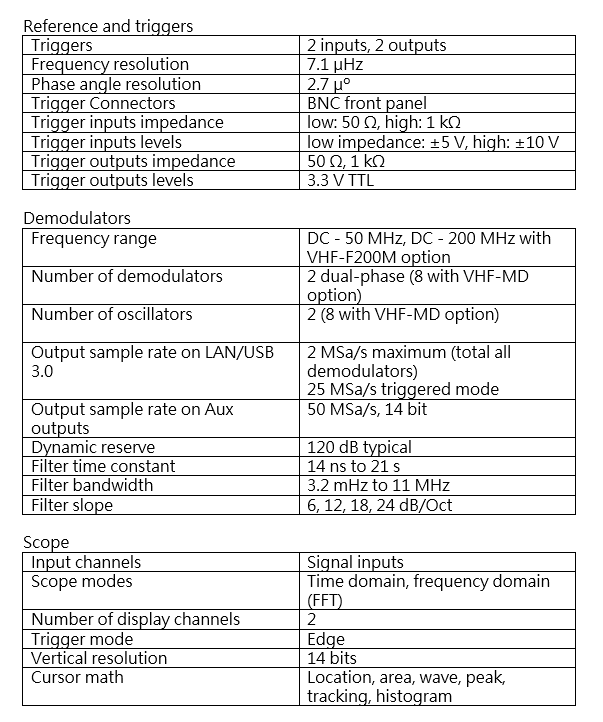
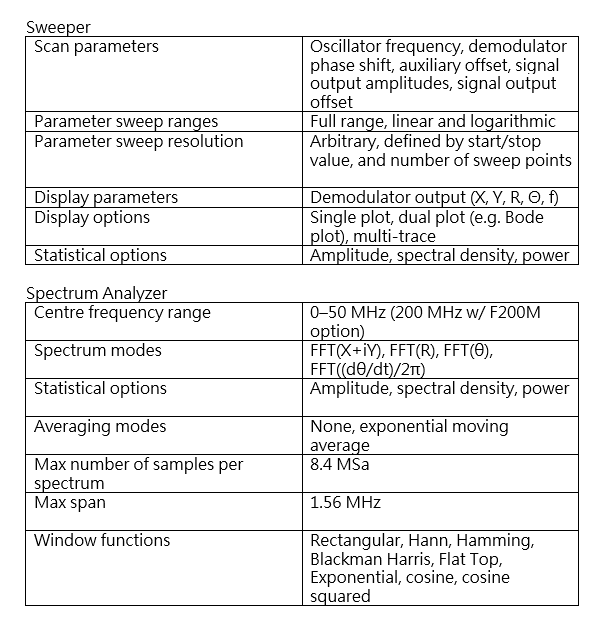
Designed with best-in-class analog performance, it builds on the proven functionality of earlier instrument generations that pioneered integrated feedback loops, multi-frequency operation, arbitrary waveform generation, and sideband analysis.With the VHFLI Lock-in Amplifier, you'll be able to:- View your signal from multiple perspectives by running Scope, Sweeper, Spectrum Analyzer, and more – simultaneously.
- Orchestrate your measurement sequences by coordinating pulses, triggers, measurements, and controllers with the LabOne Timeline Module.
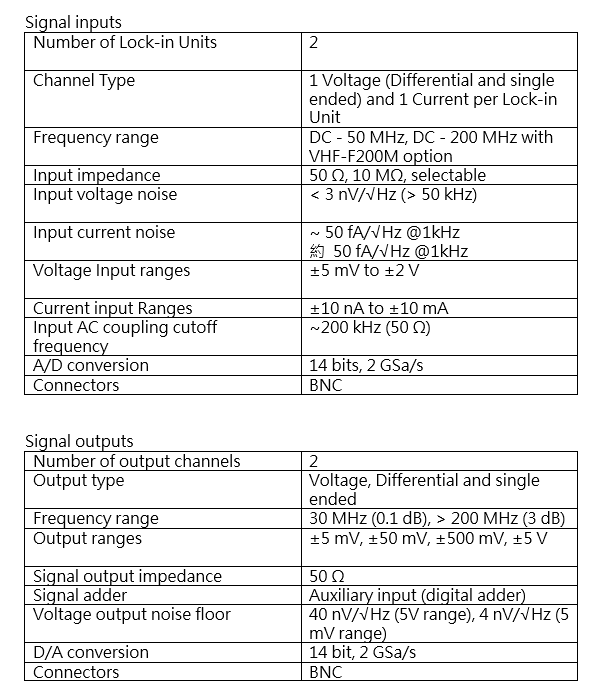
- Set up precise multichannel current and voltage measurements quickly, with an ultra-low noise floor.
- Capture fast signal dynamics thanks to short time constants and increase data throughput.
- Work efficiently with the LabOne GUI and APIs, featuring user-friendly operation and lab-ready workflows.
- Maximize signal integrity using differential inputs.
- Perform arithmetic operations on signals with the Arithmetic Unit.
- Benefit from industry-leading capabilities at a competitive price point.
Applications
The VHFLI Lock-in Amplifier’s low input noise, wide analysis bandwidth, and short low-pass filter time constant make it the ideal measurement tool for the most demanding signal analysis applications.-
Sensors: MEMS, NEMS, quantum sensing
-
Optics and photonics: Raman spectroscopy, pump-probe spectroscopy, nano-optomechanics, optical PLL, THz spectroscopy
-
Failure analysis: laser voltage probing and imaging
-
Materials science: carrier mobility, carrier density, Hall effect
-
Scanning probe microscopy: AFM, STM, MFM
Powered by LabOne ®
The VHFLI Lock-in Amplifier includes the LabOne® control software that makes setting it up easy and convenient, thanks to its graphical user interface. It also provides firm control over the entire measurement toolset that comprises the lock-ins, a dual-channel oscilloscope with FFT, a parametric sweeper, a spectrum analyzer, and much more. Additionally, all the functionality and data acquisition can be accessed through the major programming languages for ease of integration: LabVIEWTM, MATLAB®, C, .NET and Python are supported.